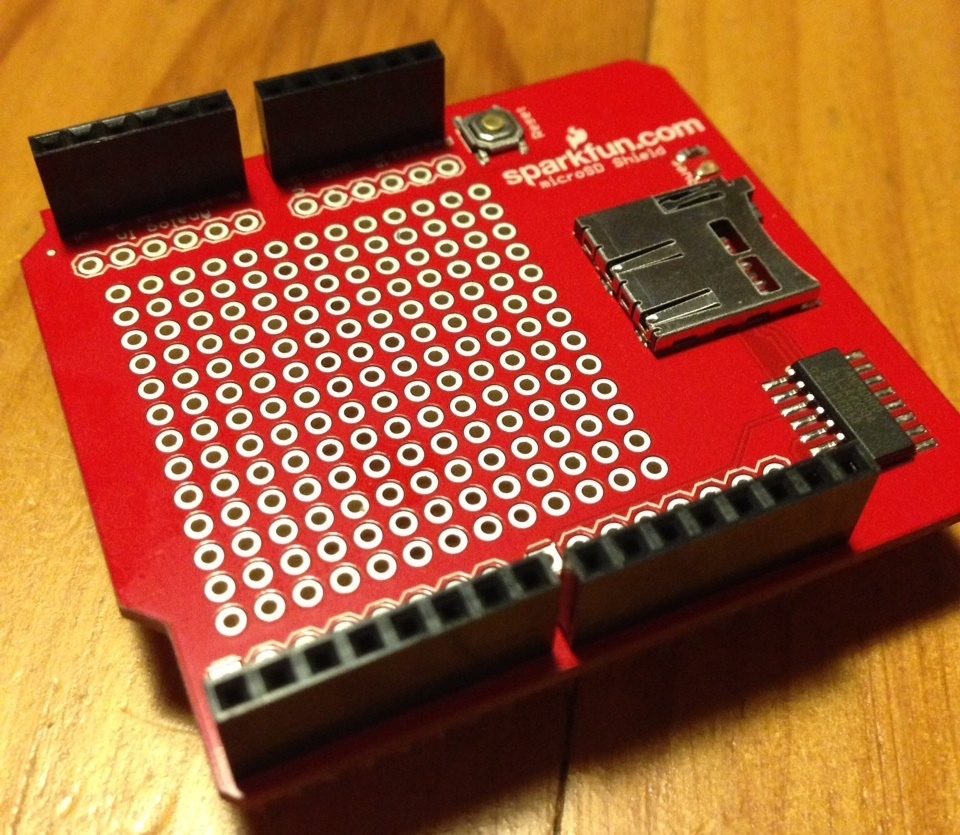
A few months ago I upgraded the hardware my avr11 project ran on from the atmega2560 8bit micro to the SAM3x based Arduino Due. In doing so I lost access to the excellent QuadRAM memory expansion board, and had to find another solution for accessing the micro SD card. For the moment, I’ve decided to go […]
#avr11
6 posts
13 Jul 2014
16 Feb 2014
Mea culpa In my first post I said that I believed the simulator performance was 10x slower than a real PDP-11/40, sadly it looks like that estimate was well off by at least another factor of 10. Yup, 100x slower than the machine I tried to simulate. At least. More accurate profiling After my last […]
30 Jan 2014
This is a post about the performance of my avr11 simulator. Specifically about the performance improvements I’ve made since my first post, and the surprises I’ve encountered during the process. Old school profiling Because avr11 runs directly on the Atmega 2560 microcontroller, there is no simple way to measure the performance of various pieces of […]
25 Jan 2014
In my previous post I had figured out that I could capture memory accesses in my simulator and send them elsewhere. In version 1 of the design I (ab)used the onboard mini SD card to simulate the entire address space. This was a very 1950’s solution and came with matching performance. Still, it did give […]
24 Jan 2014
18 bits of core memory In Schmidt’s original javascript simulator, and my port to Go, the 128 kilowords (256 kilobytes) of memory connected to the PDP-11 is modeled using an array. This is a very common technique as most simulators execute on machines that have many more resources than the machines they impersonate. However, when I […]
23 Jan 2014
Introduction It all started with Javascript. In April of 2011 Julius Schmidt wrote a PDP-11 emulator that ran in a browser. I thought that this was one of the most amazing thing I had ever seen. Late last year I ran across the link again in my Pocket backlog and spent a little time poking […]