ChatGPT introduces a new memory system to better remember preferences, keeping context fresh and relevant across conversations.
#research
216 posts
4 Jun
3 Jun
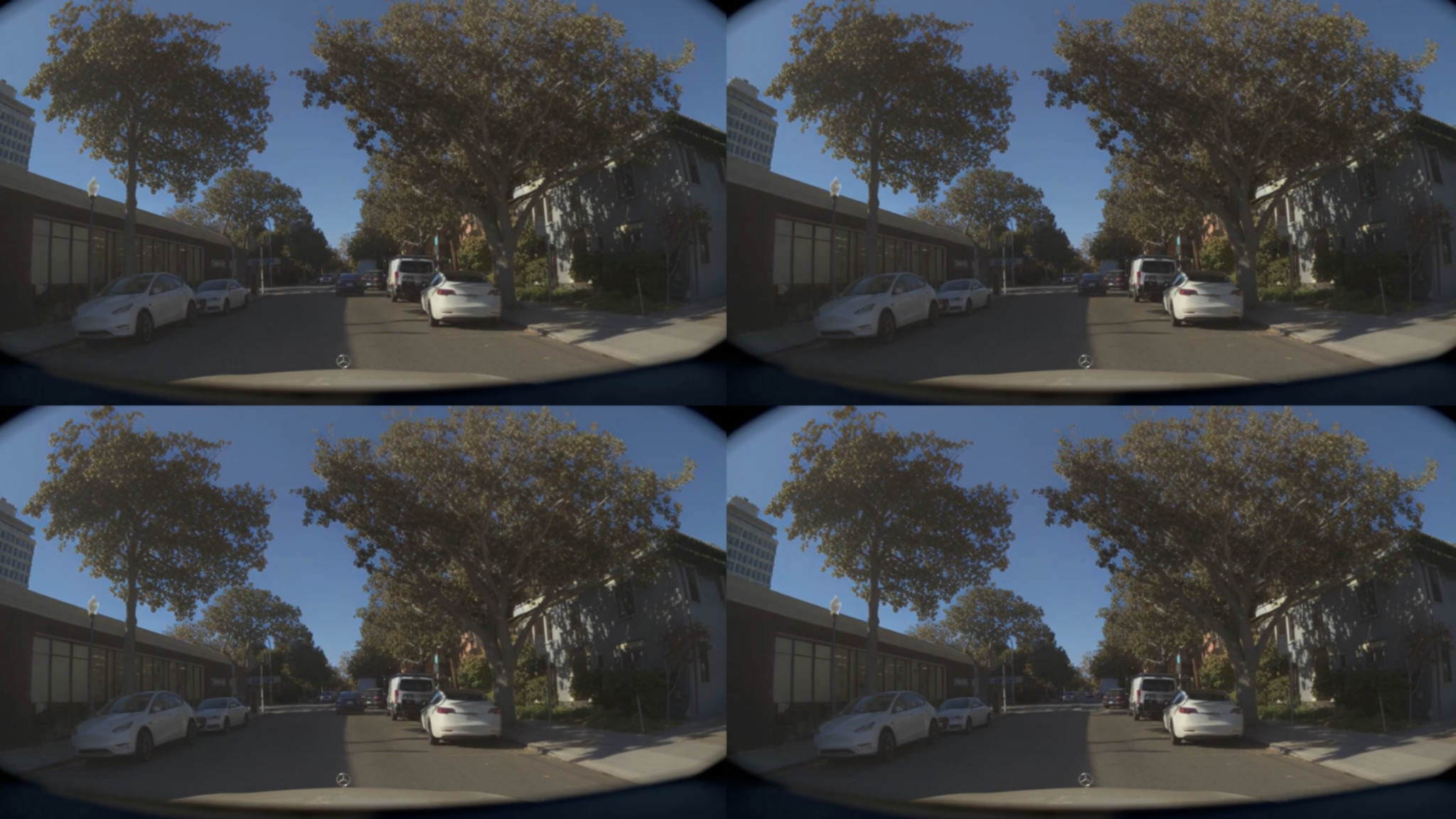
NVIDIA Research Unlocks Advanced Grasping, Smarter Autonomous Driving and Agent Training at Scale
NvidiaWhat makes a robot gripper useful isn’t that it can pick up one object — it’s that it can pick up the next one, and the one after that, with a tool it’s never held before. What makes an autonomous vehicle system safe isn’t just that it can reason through a situation — it’s that […]
28 May
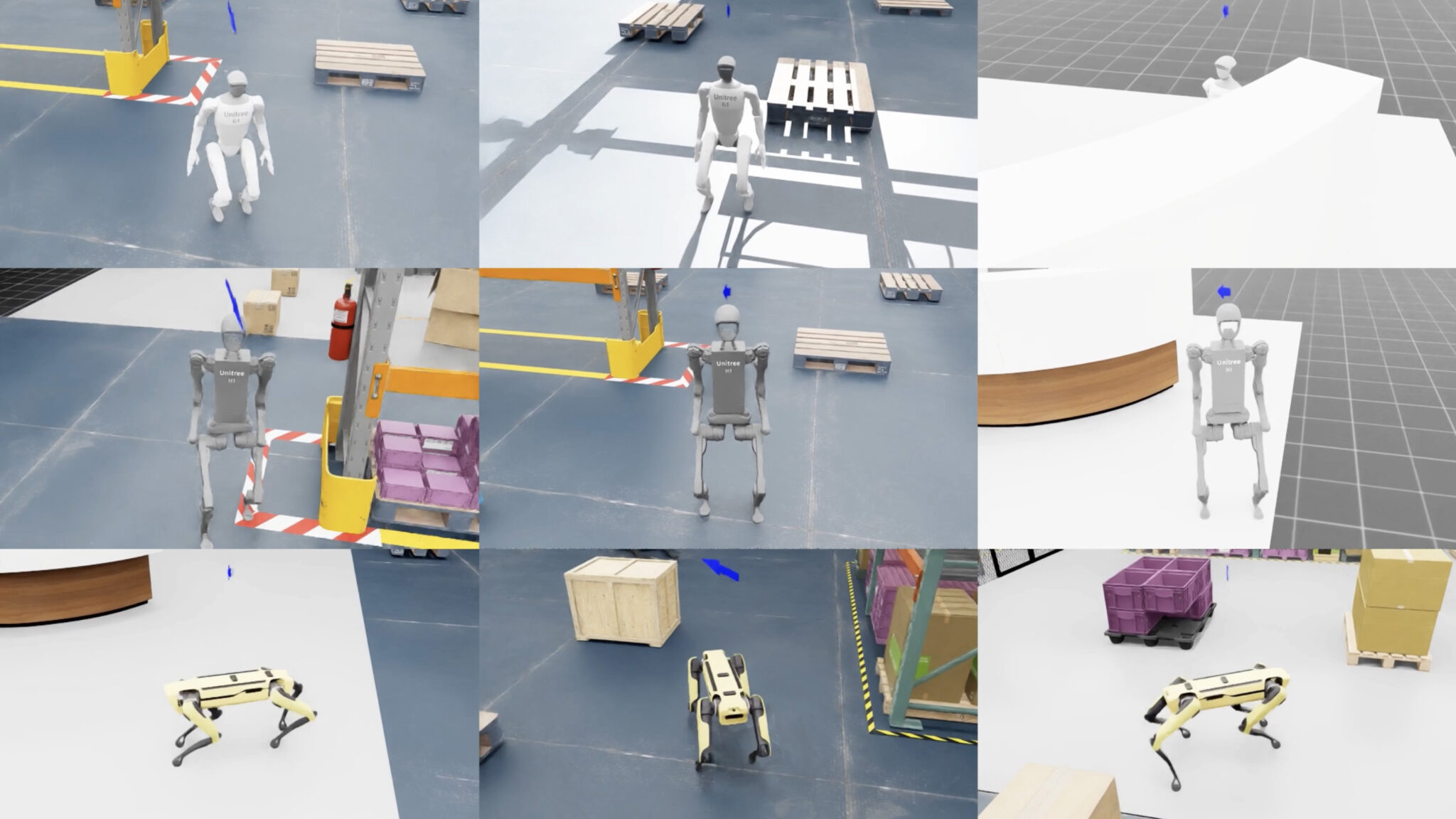
Robotics is entering a new phase: moving from controlled demos and scripted automation toward generalizable, reliable embodied autonomy in the real world. At the International Conference on Robotics and Automation (ICRA), eight of NVIDIA Research’s 28 accepted papers show how simulation-to-real transfer is becoming a foundation for that shift, helping robots perceive, reason, plan and […]

Authors: Ahmed Ben Yahmed , Antoine Schnepf , Karim Kassab , and Mélissa Tamine . The 14th International Conference on Learning Representations ( ICLR 2026 ) was held from April 23 to 27, 2026, at the Riocentro Convention and Event Center in Rio de Janeiro, Brazil. It was the first time the conference made its way to South America. As…
20 May
An OpenAI model solved the 80-year-old unit distance problem, disproving a major conjecture in discrete geometry and marking a milestone in AI-driven mathematics.
12 May
Parameter Golf brought together 1,000+ participants and 2,000+ submissions to explore AI-assisted machine learning research, coding agents, quantization, and novel model design under strict constraints.
7 May

Powering the Next American Century: US Energy Secretary Chris Wright and NVIDIA’s Ian Buck on the Genesis Mission
NvidiaAI will help build the energy it needs. That’s the case U.S. Energy Secretary Chris Wright and NVIDIA Vice President of Hyperscale and High-Performance Computing Ian Buck made Thursday morning at the SCSP AI+ Expo. The 30-minute fireside chat, moderated by SCSP president Ylli Bajraktari, was called “Powering the Next American Century.” Their argument: American […]
30 Apr
Author: Alain Rakotomamonjy From ideation to outcome, this is the story of a privacy-preserving research project. It tells how research can generate innovations but also joy and despair. Early 2024: The “Hammer” Phase Two research leads who pioneered Criteo’s early privacy initiatives, as part of the Criteo multi-year research program, introduced me to a challenge born from the Privacy Sandbox…
23 Apr

This Spring Astronomy Day, here’s a look at how AI and GPUs are helping astronomers work through unprecedented volumes of cosmic data.
22 Apr
OpenAI Privacy Filter is an open-weight model for detecting and redacting personally identifiable information (PII) in text with state-of-the-art accuracy
16 Apr
OpenAI introduces GPT-Rosalind, a frontier reasoning model built to accelerate drug discovery, genomics analysis, protein reasoning, and scientific research workflows.
7 Apr
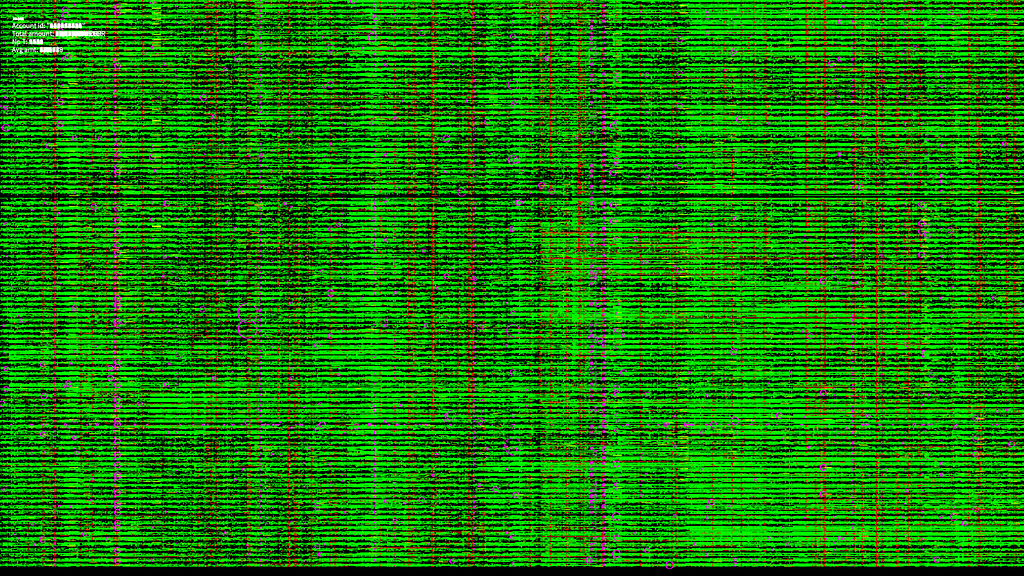
Uncovering the Shape of Fraud with Cosmos Explorer: Visual Metaphors Behind Millions of Transactions The Data Visualization Research team is developing Cosmos Explorer, an interface that leverages universe-related visual metaphors to convey information about the billions of transactions processed by Feedzai. Pedro Cruz, professor at Northeastern University, partnered with Feedzai to bring this idea to life by contributing with his…
25 Mar
Learn how OpenAI’s Model Spec serves as a public framework for model behavior, balancing safety, user freedom, and accountability as AI systems advance.
12 Mar
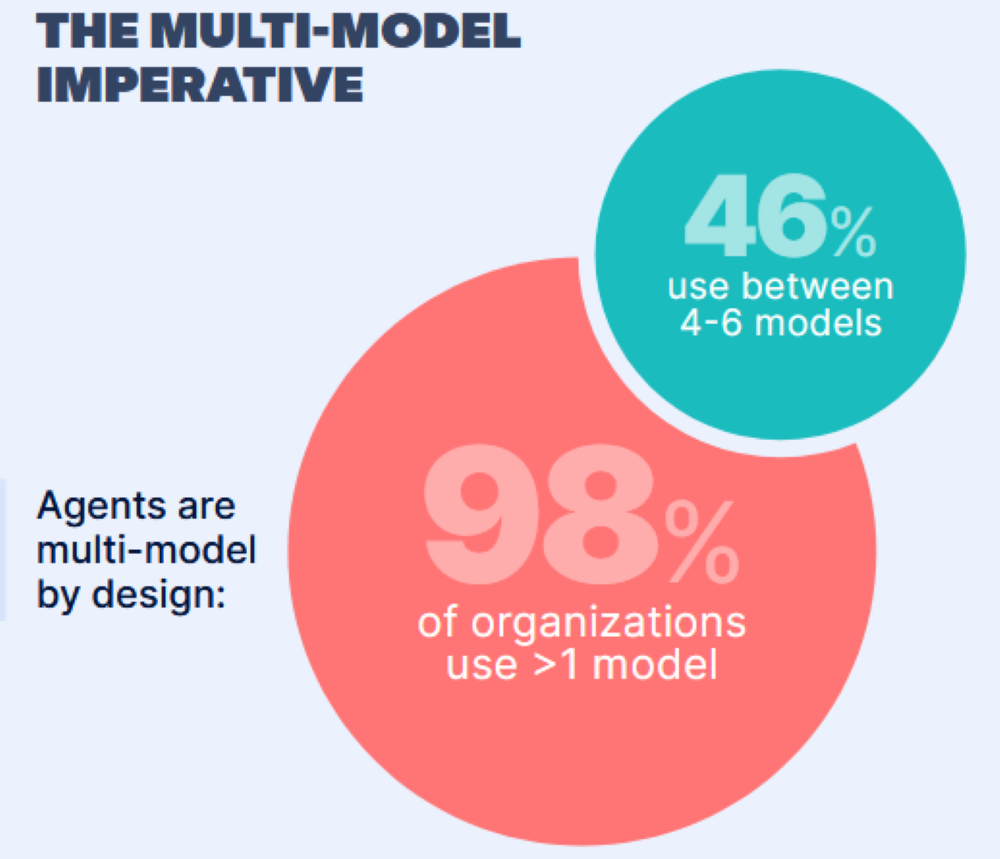
Building agents is now a strategic priority for 95% of respondents in our latest State of Agentic AI research, which surveyed more than 800 developers and decision-makers worldwide. The shift is happening quickly: agent adoption has moved beyond experiments and demos into early operational maturity. But the road to enterprise-scale adoption is still complex. The...
10 Mar
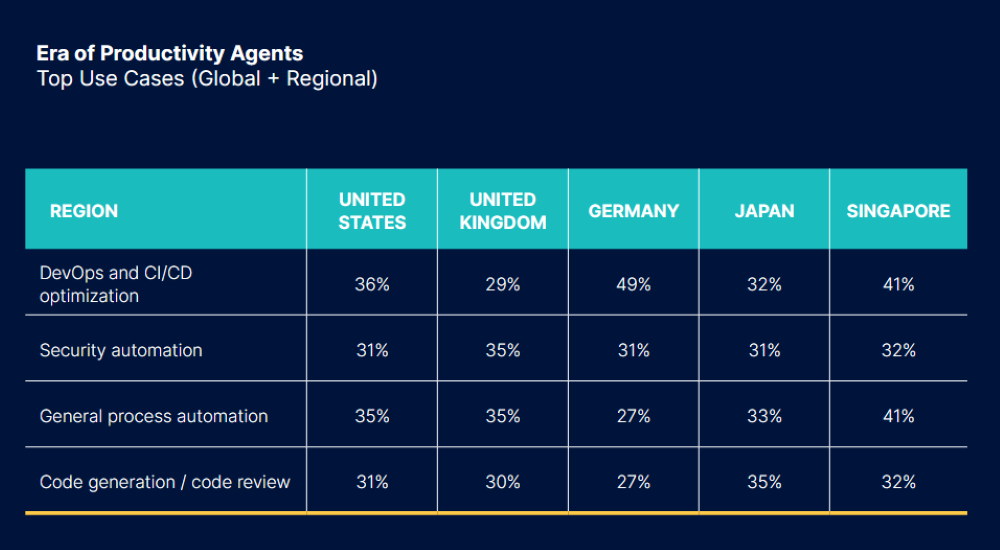
It’s hard to find a team today that isn’t talking about agents. For most organizations, this isn’t a “someday” project anymore. Building agents is a strategic priority for 95% of respondents that we surveyed across the globe with 800+ developers and decision makers in our latest State of Agentic AI research. The shift is happening...
IH-Challenge trains models to prioritize trusted instructions, improving instruction hierarchy, safety steerability, and resistance to prompt injection attacks.
5 Mar
OpenAI introduces CoT-Control and finds reasoning models struggle to control their chains of thought, reinforcing monitorability as an AI safety safeguard.
4 Mar
A new preprint extends single-minus amplitudes to gravitons, with GPT-5.2 Pro helping derive and verify nonzero graviton tree amplitudes in quantum gravity.
23 Feb
SWE-bench Verified is increasingly contaminated and mismeasures frontier coding progress. Our analysis shows flawed tests and training leakage. We recommend SWE-bench Pro.
20 Feb
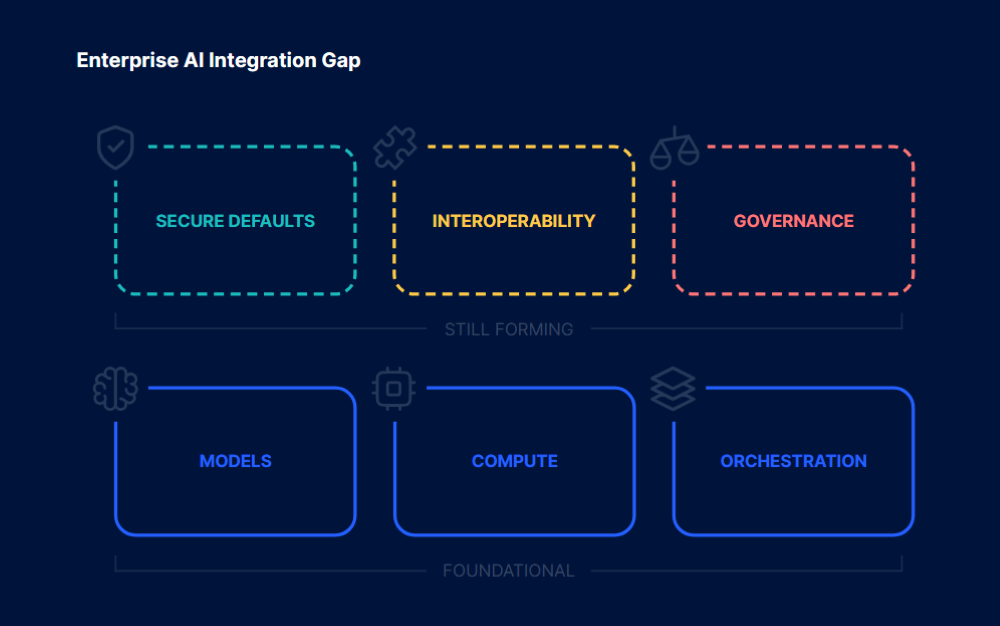
Based on Docker’s State of Agentic AI report, a global survey of more than 800 developers, platform engineers, and technology decision-makers, this blog summarizes key findings of what's really happening as agentic AI scales within organizations. Drawing on insights from decision-makers and purchase influencers worldwide, we'll give you a preview on not only where teams...
We share our AI model’s proof attempts for the First Proof math challenge, testing research-grade reasoning on expert-level problems.
18 Feb
OpenAI and Paradigm introduce EVMbench, a benchmark evaluating AI agents’ ability to detect, patch, and exploit high-severity smart contract vulnerabilities.
13 Feb
A new preprint shows GPT-5.2 proposing a new formula for a gluon amplitude, later formally proved and verified by OpenAI and academic collaborators.
5 Feb
An autonomous lab combining OpenAI’s GPT-5 with Ginkgo Bioworks’ cloud automation cut cell-free protein synthesis costs by 40% through closed-loop experimentation.
8 Jan
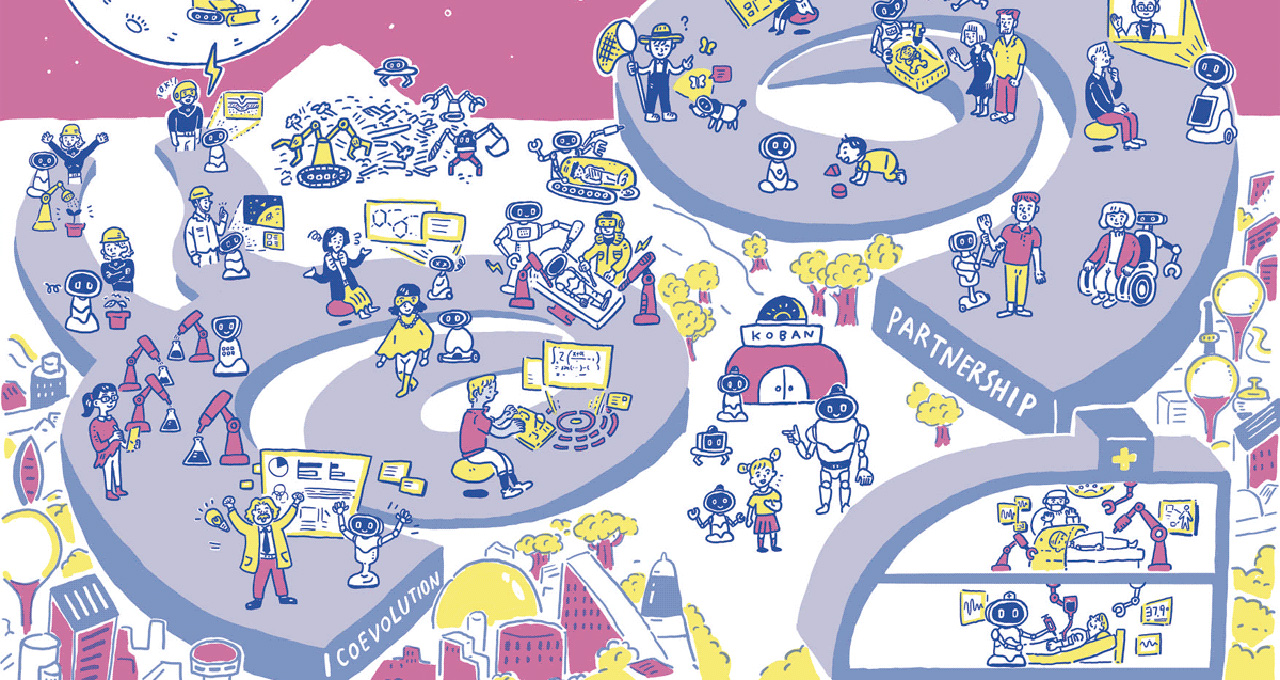
The next universal technology since the smartphone is on the horizon — and it may be a little less pocket friendly. The Moonshot research program, funded by the Japan Science and Technology Agency and accelerated by NVIDIA AI and robotics technologies, is working to create a world by 2050 where AI-powered, autonomously learning robots are […]
22 Dec 2025
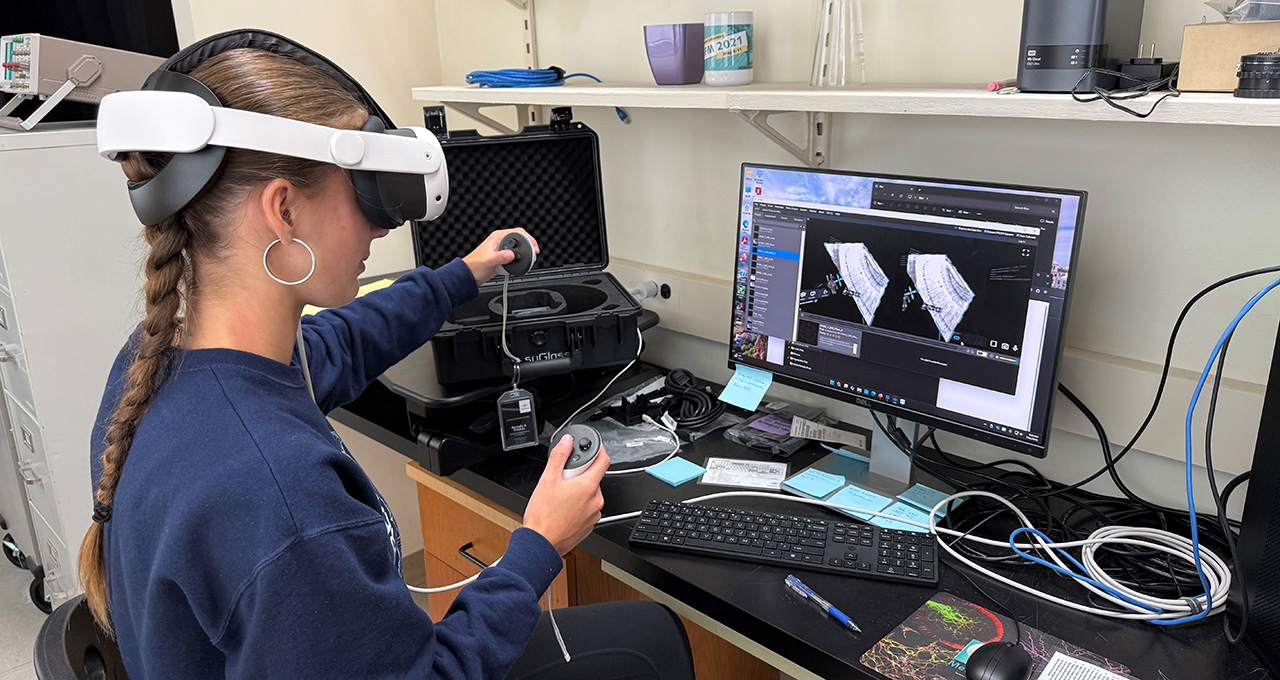
The works of Plato state that when humans have an experience, some level of change occurs in their brain, which is powered by memory — specifically long-term memory. This change is what Andre Fenton, professor of neural science at New York University, and Abhishek Kumar, assistant professor of cell and regenerative biology at the University […]
18 Dec 2025
OpenAI introduces a new framework and evaluation suite for chain-of-thought monitorability, covering 13 evaluations across 24 environments. Our findings show that monitoring a model’s internal reasoning is far more effective than monitoring outputs alone, offering a promising path toward scalable control as AI systems grow more capable.
17 Dec 2025
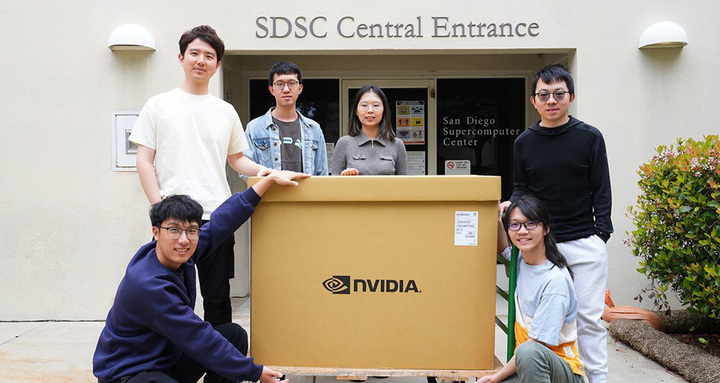
The Hao AI Lab research team at the University of California San Diego — at the forefront of pioneering AI model innovation — recently received an NVIDIA DGX B200 system to elevate their critical work in large language model inference. Many LLM inference platforms in production today, such as NVIDIA Dynamo, use research concepts that […]
16 Dec 2025
OpenAI introduces FrontierScience, a benchmark testing AI reasoning in physics, chemistry, and biology to measure progress toward real scientific research.
OpenAI introduces a real-world evaluation framework to measure how AI can accelerate biological research in the wet lab. Using GPT-5 to optimize a molecular cloning protocol, the work explores both the promise and risks of AI-assisted experimentation.
4 Dec 2025

For 25 years, the NVIDIA Graduate Fellowship Program has supported graduate students doing outstanding work relevant to NVIDIA technologies. Today, the program announced the latest awards of up to $60,000 each to 10 Ph.D. students involved in research that spans all areas of computing innovation. Selected from a highly competitive applicant pool, the awardees will […]
3 Dec 2025
OpenAI researchers are testing “confessions,” a method that trains models to admit when they make mistakes or act undesirably, helping improve AI honesty, transparency, and trust in model outputs.
1 Dec 2025
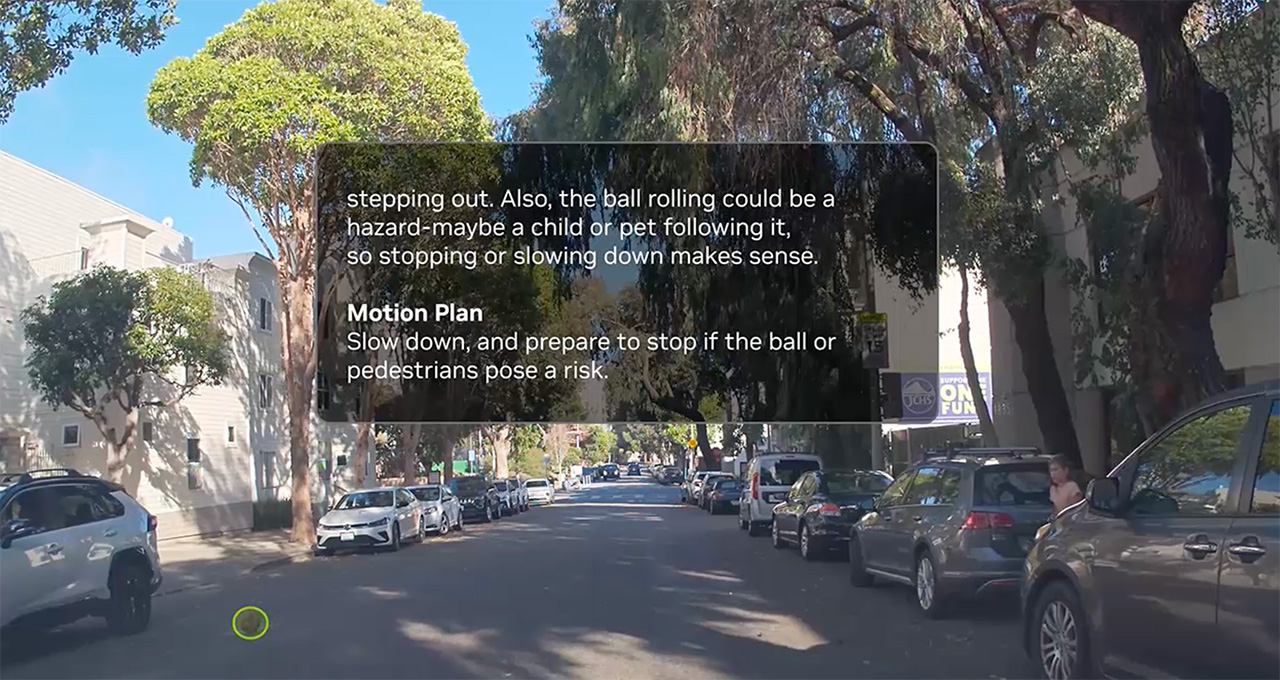
Researchers worldwide rely on open-source technologies as the foundation of their work. To equip the community with the latest advancements in digital and physical AI, NVIDIA is further expanding its collection of open AI models, datasets and tools — with potential applications in virtually every research field. At NeurIPS, one of the world’s top AI […]
20 Nov 2025

Five finalists for the esteemed high-performance computing award have achieved breakthroughs in climate modeling, fluid simulation and more with the Alps, JUPITER and Perlmutter supercomputers — with two winners taking home the prize.
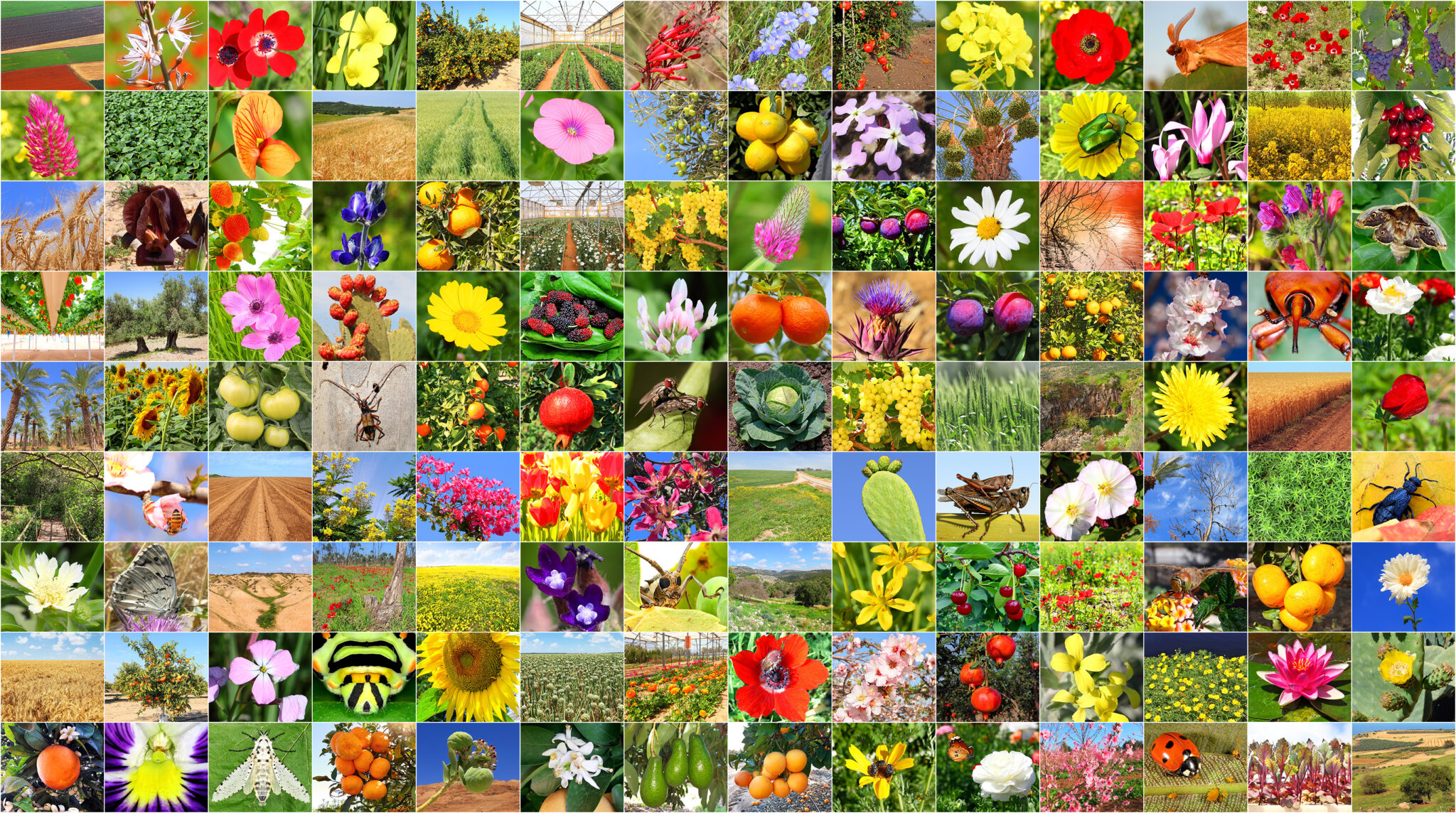
The Largest Digital Zoo: Biology Model Trained on NVIDIA GPUs Identifies Over a Million Species
NvidiaTanya Berger-Wolf’s first computational biology project started as a bet with a colleague: that she could build an AI model capable of identifying individual zebras faster than a zoologist. She won. Now, the director of the Translational Data Analytics Institute and a professor at The Ohio State University, Berger-Wolf is taking on the whole animal […]
OpenAI introduces the first research cases showing how GPT-5 accelerates scientific progress across math, physics, biology, and computer science. Explore how AI and researchers collaborate to generate proofs, uncover new insights, and reshape the pace of discovery.
19 Nov 2025
Learn how evals help businesses define, measure, and improve AI performance—reducing risk, boosting productivity, and driving strategic advantage.
18 Nov 2025
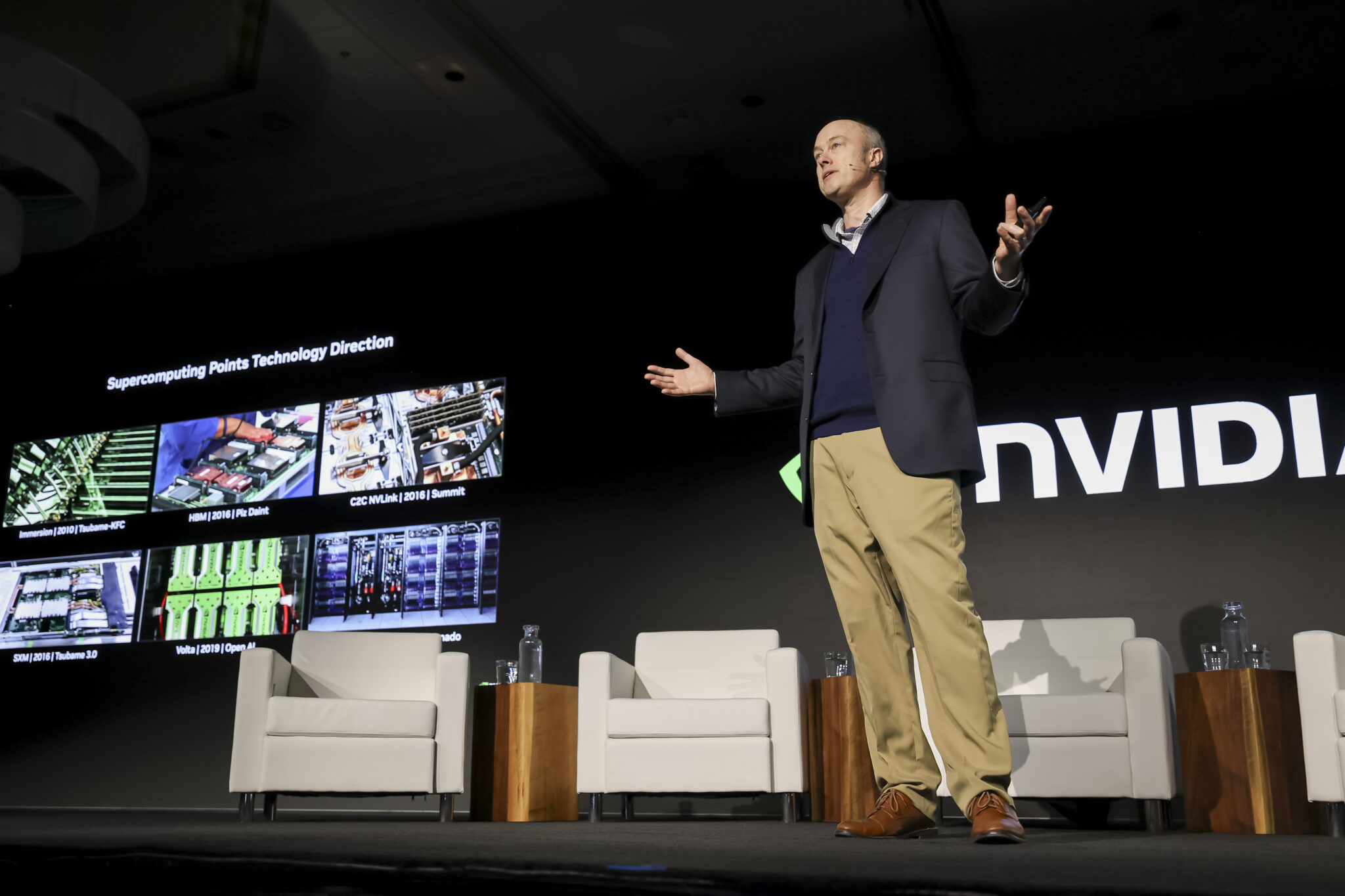
Where CPUs once ruled, power efficiency — and then AI — flipped the balance. Extreme co-design across GPUs, networking and software now drives the frontier of science.
17 Nov 2025

To power future technologies including liquid-cooled data centers, high-resolution digital displays and long-lasting batteries, scientists are searching for novel chemicals and materials optimized for factors like energy use, durability and efficacy. New NVIDIA-accelerated data processing pipelines and AI microservices unveiled at the SC25 conference in St. Louis are advancing chemistry and material science to support […]
13 Nov 2025
OpenAI is exploring mechanistic interpretability to understand how neural networks reason. Our new sparse model approach could make AI systems more transparent and support safer, more reliable behavior.
3 Nov 2025
OpenAI introduces IndQA, a new benchmark for evaluating AI systems in Indian languages. Built with domain experts, IndQA tests cultural understanding and reasoning across 12 languages and 10 knowledge areas.
9 Oct 2025
Learn how OpenAI evaluates political bias in ChatGPT through new real-world testing methods that improve objectivity and reduce bias.
3 Oct 2025

Introduction Over the years, we have evolved from using simple, often rule-based algorithms to sophisticated machine learning models. These models are incredibly good at finding patterns in large datasets, but due to their complexity it is frequently challenging for a human to understand why a certain input leads to its respective output. This is especially problematic in areas where high-stakes…
30 Sept 2025
Our latest video generation model is more physically accurate, realistic, and controllable than prior systems. It also features synchronized dialogue and sound effects. Create with it in the new Sora app.
15 Sept 2025
New research from the largest study of ChatGPT use shows how the tool creates economic value through both personal and professional use. Adoption is broadening beyond early users, closing gaps and making AI a part of everyday life.
5 Sept 2025
OpenAI’s new research explains why language models hallucinate. The findings show how improved evaluations can enhance AI reliability, honesty, and safety.
25 Jul 2025

By Sofia Guerreiro, Ricardo Ribeiro Pereira, Iker Perez, Jacopo Bono Detecting financial fraud is like finding a moving needle in a shifting haystack . Fraud accounts for a tiny fraction of financial transactions, often less than 0.1%. At the same time, fraudsters are constantly adapting their tactics to evade detection. And this happens within a live and dynamic environment, where…
21 Mar 2025
An OpenAI and MIT Media Lab Research collaboration.
2 Feb 2025
An agent that uses reasoning to synthesize large amounts of online information and complete multi-step research tasks for you. Available to Pro users today, Plus and Team next.
31 Jan 2025
This report outlines the safety work carried out for the OpenAI o3-mini model, including safety evaluations, external red teaming, and Preparedness Framework evaluations.
23 Jan 2025
22 Jan 2025
Trading Inference-Time Compute for Adversarial Robustness
5 Dec 2024
This report outlines the safety work carried out prior to releasing OpenAI o1 and o1-mini, including external red teaming and frontier risk evaluations according to our Preparedness Framework.
22 Nov 2024
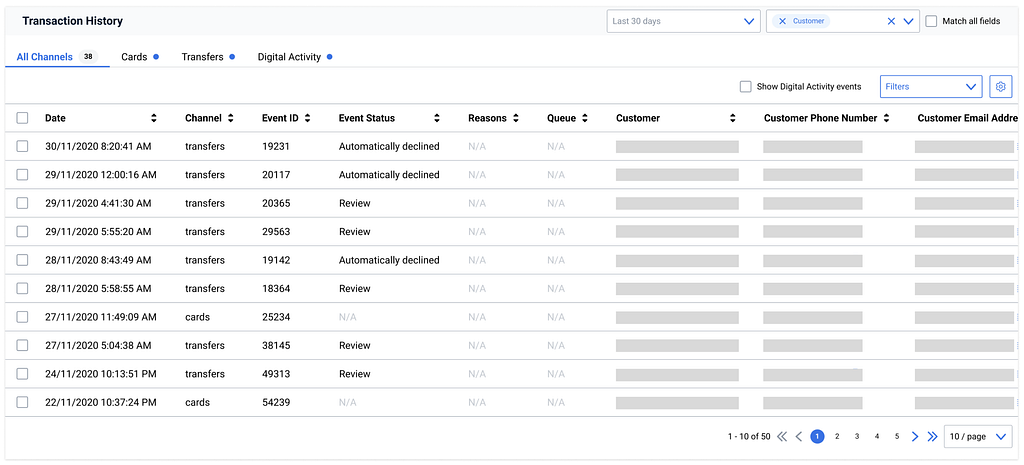
Every year, millions of people fall victim to financial fraud. In 2023, the losses tied to this type of crime were estimated at US$159 billion just in the US , with some people losing all of their retirement savings to scammers . However, the impacts of this issue stretch beyond someone’s finances. It can also impact a victim’s life in…
21 Nov 2024
Advancing red teaming with people and AI
30 Oct 2024
A factuality benchmark called SimpleQA that measures the ability for language models to answer short, fact-seeking questions.
23 Oct 2024
We’ve simplified, stabilized, and scaled continuous-time consistency models, achieving comparable sample quality to leading diffusion models, while using only two sampling steps.
15 Oct 2024
We've analyzed how ChatGPT responds to users based on their name, using AI research assistants to protect privacy.
10 Oct 2024
We introduce MLE-bench, a benchmark for measuring how well AI agents perform at machine learning engineering.
4 Oct 2024
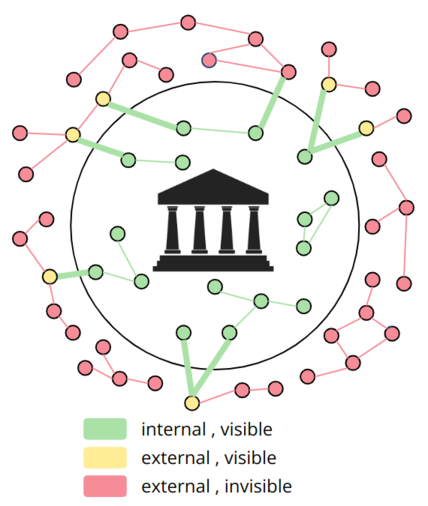
Digital systems have become deeply integrated into many aspects of modern life, particularly within the financial sector. While digital banking simplifies day-to-day operations for clients, it also creates new opportunities for malicious actors to exploit these systems. As a result, money laundering has grown particularly prevalent due to this digital expansion. Banks are required to monitor for money laundering activities…
12 Sept 2024
Advancing cost-efficient reasoning
13 Aug 2024
We’re releasing a human-validated subset of SWE-bench that more reliably evaluates AI models’ ability to solve real-world software issues.
12 Aug 2024
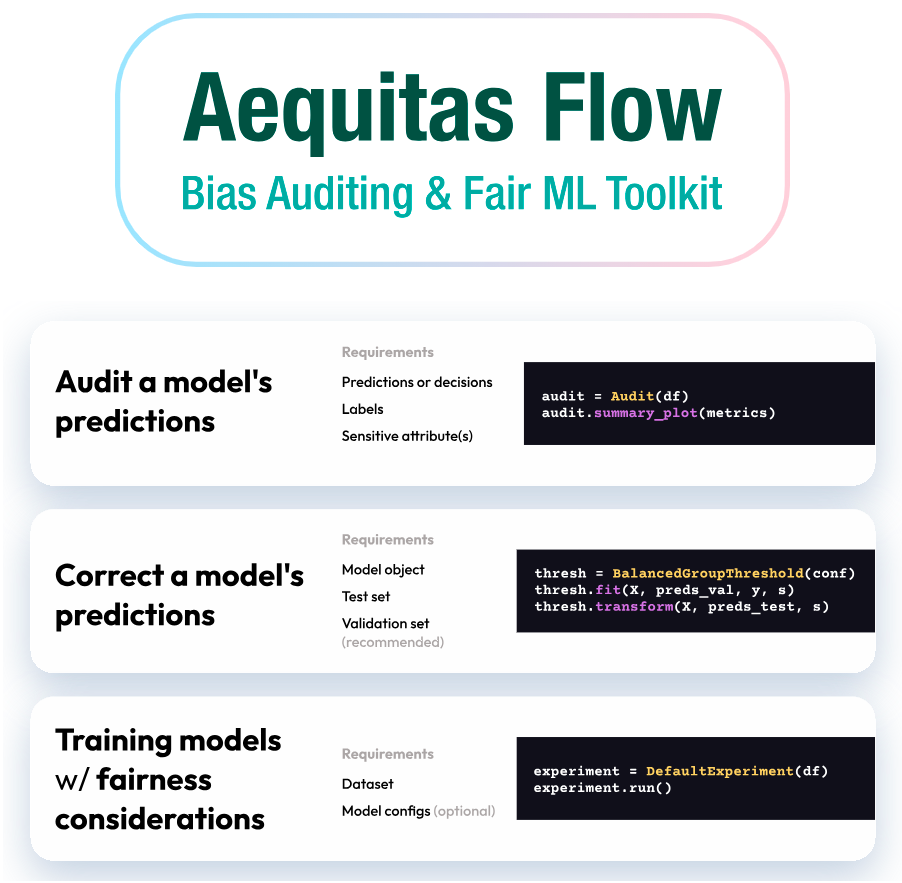
By Sérgio Jesus, Inês Silva, Pedro Saleiro, Hugo Ferreira, Pedro Bizarro In this blog post we will visit Aequitas Flow , an Open-Source framework designed to run complete and standardized experiments of Fair ML algorithms. We encourage you to try Aequitas Flow with the Google Colab Notebooks, which are available in the project’s GitHub repository . This blog post is…
24 Jul 2024
We've developed and applied a new method leveraging Rule-Based Rewards (RBRs) that aligns models to behave safely without extensive human data collection.
18 Jul 2024
17 Jul 2024
Discover how prover-verifier games improve the legibility of language model outputs, making AI solutions clearer, easier to verify, and more trustworthy for both humans and machines.
10 Jul 2024
OpenAI and Los Alamos National Laboratory are working to develop safety evaluations to assess and measure biological capabilities and risks associated with frontier models.
21 Jun 2024

In the world of financial services, the bank or financial institution’s relationship with the customer relies on digital trust , which is anchored in two fundamental principles. First, it must ensure the person engaging through digital banking channels is genuinely the individual they claim to be. Second, it must confirm that this person is authorized to complete the intended financial…
20 Jun 2024
We present a holistic approach to building a robust and useful natural language classification system for real-world content moderation.
Diffusion models have significantly advanced the fields of image, audio, and video generation, but they depend on an iterative sampling process that causes slow generation.
Consistency models are a nascent family of generative models that can sample high quality data in one step without the need for adversarial training.
6 Jun 2024
Using new techniques for scaling sparse autoencoders, we automatically identified 16 million patterns in GPT-4's computations.
13 May 2024
We’re announcing GPT-4 Omni, our new flagship model which can reason across audio, vision, and text in real time.
7 May 2024
Today we’re introducing new technology to help researchers identify content created by our tools and joining the Coalition for Content Provenance and Authenticity Steering Committee to promote industry standards.
19 Apr 2024
Today's LLMs are susceptible to prompt injections, jailbreaks, and other attacks that allow adversaries to overwrite a model's original instructions with their own malicious prompts.
15 Feb 2024
We explore large-scale training of generative models on video data. Specifically, we train text-conditional diffusion models jointly on videos and images of variable durations, resolutions and aspect ratios. We leverage a transformer architecture that operates on spacetime patches of video and image latent codes. Our largest model, Sora, is capable of generating a minute of high fidelity video. Our results…
31 Jan 2024
We’re developing a blueprint for evaluating the risk that a large language model (LLM) could aid someone in creating a biological threat. In an evaluation involving both biology experts and students, we found that GPT-4 provides at most a mild uplift in biological threat creation accuracy. While this uplift is not large enough to be conclusive, our finding is a…
31 May 2023
We've trained a model to achieve a new state-of-the-art in mathematical problem solving by rewarding each correct step of reasoning (“process supervision”) instead of simply rewarding the correct final answer (“outcome supervision”). In addition to boosting performance relative to outcome supervision, process supervision also has an important alignment benefit: it directly trains the model to produce a chain-of-thought that is…
25 May 2023
Our nonprofit organization, OpenAI, Inc., is launching a program to award ten $100,000 grants to fund experiments in setting up a democratic process for deciding what rules AI systems should follow, within the bounds defined by the law.
17 Mar 2023
14 Mar 2023
We’ve created GPT-4, the latest milestone in OpenAI’s effort in scaling up deep learning. GPT-4 is a large multimodal model (accepting image and text inputs, emitting text outputs) that, while less capable than humans in many real-world scenarios, exhibits human-level performance on various professional and academic benchmarks.
16 Dec 2022
19 Oct 2022
21 Sept 2022
28 Jul 2022
28 Jun 2022
In order to share the magic of DALL·E 2 with a broad audience, we needed to reduce the risks associated with powerful image generation models. To this end, we put various guardrails in place to prevent generated images from violating our content policy.
23 Jun 2022
We trained a neural network to play Minecraft by Video PreTraining (VPT) on a massive unlabeled video dataset of human Minecraft play, while using only a small amount of labeled contractor data. With fine-tuning, our model can learn to craft diamond tools, a task that usually takes proficient humans over 20 minutes (24,000 actions). Our model uses the native human…
17 Jun 2022
9 Jun 2022
Large neural networks are at the core of many recent advances in AI, but training them is a difficult engineering and research challenge which requires orchestrating a cluster of GPUs to perform a single synchronized calculation.
28 May 2022
13 Apr 2022
3 Mar 2022
2 Feb 2022
We built a neural theorem prover for Lean that learned to solve a variety of challenging high-school olympiad problems, including problems from the AMC12 and AIME competitions, as well as two problems adapted from the IMO.
24 Jan 2022
16 Dec 2021
We’ve fine-tuned GPT-3 to more accurately answer open-ended questions using a text-based web browser.
29 Oct 2021
We’ve trained a system that solves grade school math problems with nearly twice the accuracy of a fine-tuned GPT-3 model. It solves about 90% as many problems as real kids: a small sample of 9-12 year olds scored 60% on a test from our dataset, while our system scored 55% on those same problems.
8 Sept 2021
28 Jul 2021
We’re releasing Triton 1.0, an open-source Python-like programming language which enables researchers with no CUDA experience to write highly efficient GPU code—most of the time on par with what an expert would be able to produce.
7 Jul 2021
1 Jul 2021
Cloud-based applications have helped make a new world of work possible. But they have also opened up the doors to new risks and threats, such as ransomware by remote desktop takeover and data loss through unprotected cloud storage use. The post Cloud Application Security – Risks, Questions, Insights, and Solutions appeared first on Cisco Umbrella.
4 Mar 2021
We’ve discovered neurons in CLIP that respond to the same concept whether presented literally, symbolically, or conceptually. This may explain CLIP’s accuracy in classifying surprising visual renditions of concepts, and is also an important step toward understanding the associations and biases that CLIP and similar models learn.
4 Feb 2021
25 Jan 2021
We’ve scaled Kubernetes clusters to 7,500 nodes, producing a scalable infrastructure for large models like GPT-3, CLIP, and DALL·E, but also for rapid small-scale iterative research such as Scaling Laws for Neural Language Models.
5 Jan 2021
We’ve trained a neural network called DALL·E that creates images from text captions for a wide range of concepts expressible in natural language.
We’re introducing a neural network called CLIP which efficiently learns visual concepts from natural language supervision. CLIP can be applied to any visual classification benchmark by simply providing the names of the visual categories to be recognized, similar to the “zero-shot” capabilities of GPT-2 and GPT-3.
7 Sept 2020
17 Jun 2020
We find that, just as a large transformer model trained on language can generate coherent text, the same exact model trained on pixel sequences can generate coherent image completions and samples. By establishing a correlation between sample quality and image classification accuracy, we show that our best generative model also contains features competitive with top convolutional nets in the unsupervised…
28 May 2020
5 May 2020
We’re releasing an analysis showing that since 2012 the amount of compute needed to train a neural net to the same performance on ImageNet classification has been decreasing by a factor of 2 every 16 months. Compared to 2012, it now takes 44 times less compute to train a neural network to the level of AlexNet (by contrast, Moore’s Law…
30 Apr 2020
We’re introducing Jukebox, a neural net that generates music, including rudimentary singing, as raw audio in a variety of genres and artist styles. We’re releasing the model weights and code, along with a tool to explore the generated samples.
16 Apr 2020
We’ve contributed to a multi-stakeholder report by 58 co-authors at 30 organizations, including the Centre for the Future of Intelligence, Mila, Schwartz Reisman Institute for Technology and Society, Center for Advanced Study in the Behavioral Sciences, and Center for Security and Emerging Technologies. This report describes 10 mechanisms to improve the verifiability of claims made about AI systems. Developers can…
14 Apr 2020
We’re introducing OpenAI Microscope, a collection of visualizations of every significant layer and neuron of eight vision “model organisms” which are often studied in interpretability. Microscope makes it easier to analyze the features that form inside these neural networks, and we hope it will help the research community as we move towards understanding these complicated systems.
23 Jan 2020
19 Dec 2019
The first annual MDN Developer Needs Assessment aims to represent the voices of developers and designers working on the web. We've analyzed the data provided by more than 28,000 completed surveys, and we've identified 28 discrete needs, sorted into 14 different themes. Four of the top ten needs relate to browser compatibility, our #1 theme. Documentation, Testing, Debugging, and Frameworks…
13 Dec 2019
5 Dec 2019
We show that the double descent phenomenon occurs in CNNs, ResNets, and transformers: performance first improves, then gets worse, and then improves again with increasing model size, data size, or training time. This effect is often avoided through careful regularization. While this behavior appears to be fairly universal, we don’t yet fully understand why it happens, and view further study…
3 Dec 2019
We’re releasing Procgen Benchmark, 16 simple-to-use procedurally-generated environments which provide a direct measure of how quickly a reinforcement learning agent learns generalizable skills.
5 Nov 2019
As the final model release of GPT-2’s staged release, we’re releasing the largest version (1.5B parameters) of GPT-2 along with code and model weights to facilitate detection of outputs of GPT-2 models. While there have been larger language models released since August, we’ve continued with our original staged release plan in order to provide the community with a test case…
15 Oct 2019
We’ve trained a pair of neural networks to solve the Rubik’s Cube with a human-like robot hand. The neural networks are trained entirely in simulation, using the same reinforcement learning code as OpenAI Five paired with a new technique called Automatic Domain Randomization (ADR). The system can handle situations it never saw during training, such as being prodded by a…
17 Sept 2019
We’ve observed agents discovering progressively more complex tool use while playing a simple game of hide-and-seek. Through training in our new simulated hide-and-seek environment, agents build a series of six distinct strategies and counterstrategies, some of which we did not know our environment supported. The self-supervised emergent complexity in this simple environment further suggests that multi-agent co-adaptation may one day…
20 Aug 2019
We’re releasing the 774 million parameter GPT-2 language model after the release of our small 124M model in February, staged release of our medium 355M model in May, and subsequent research with partners and the AI community into the model’s potential for misuse and societal benefit. We’re also releasing an open-source legal agreement to make it easier for organizations to…
23 May 2019

With this week's release of Firefox 67, the new high performance royalty-free AV1 video decoder dav1d is now enabled by default on all desktop platforms (Windows, OSX and Linux) for both 32-bit and 64-bit systems. And work is in progress on rav1e, the Rust AV1 encoder. The post Firefox brings you smooth video playback with the world’s fastest AV1 decoder…
25 Apr 2019
We’ve created MuseNet, a deep neural network that can generate 4-minute musical compositions with 10 different instruments, and can combine styles from country to Mozart to the Beatles. MuseNet was not explicitly programmed with our understanding of music, but instead discovered patterns of harmony, rhythm, and style by learning to predict the next token in hundreds of thousands of MIDI…
23 Apr 2019
We’ve developed the Sparse Transformer, a deep neural network which sets new records at predicting what comes next in a sequence—whether text, images, or sound. It uses an algorithmic improvement of the attention mechanism to extract patterns from sequences 30x longer than possible previously.
15 Apr 2019
OpenAI Five is the first AI to beat the world champions in an esports game, having won two back-to-back games versus the world champion Dota 2 team, OG, at Finals this weekend. Both OpenAI Five and DeepMind’s AlphaStar had previously beaten good pros privately but lost their live pro matches, making this also the first time an AI has beaten…
21 Mar 2019
We’ve made progress towards stable and scalable training of energy-based models (EBMs) resulting in better sample quality and generalization ability than existing models. Generation in EBMs spends more compute to continually refine its answers and doing so can generate samples competitive with GANs at low temperatures, while also having mode coverage guarantees of likelihood-based models. We hope these findings stimulate…
4 Mar 2019
We’re releasing a Neural MMO, a massively multiagent game environment for reinforcement learning agents. Our platform supports a large, variable number of agents within a persistent and open-ended task. The inclusion of many agents and species leads to better exploration, divergent niche formation, and greater overall competence.
14 Feb 2019
We’ve trained a large-scale unsupervised language model which generates coherent paragraphs of text, achieves state-of-the-art performance on many language modeling benchmarks, and performs rudimentary reading comprehension, machine translation, question answering, and summarization—all without task-specific training.
4 Feb 2019
14 Dec 2018
We’ve discovered that the gradient noise scale, a simple statistical metric, predicts the parallelizability of neural network training on a wide range of tasks. Since complex tasks tend to have noisier gradients, increasingly large batch sizes are likely to become useful in the future, removing one potential limit to further growth of AI systems. More broadly, these results show that…
6 Dec 2018
We’re releasing CoinRun, a training environment which provides a metric for an agent’s ability to transfer its experience to novel situations and has already helped clarify a longstanding puzzle in reinforcement learning. CoinRun strikes a desirable balance in complexity: the environment is simpler than traditional platformer games like Sonic the Hedgehog but still poses a worthy generalization challenge for state…
8 Nov 2018
We’re releasing Spinning Up in Deep RL, an educational resource designed to let anyone learn to become a skilled practitioner in deep reinforcement learning. Spinning Up consists of crystal-clear examples of RL code, educational exercises, documentation, and tutorials.
7 Nov 2018
We’ve developed an energy-based model that can quickly learn to identify and generate instances of concepts, such as near, above, between, closest, and furthest, expressed as sets of 2d points. Our model learns these concepts after only five demonstrations. We also show cross-domain transfer: we use concepts learned in a 2d particle environment to solve tasks on a 3-dimensional physics-based…
5 Nov 2018
31 Oct 2018
We’ve developed Random Network Distillation (RND), a prediction-based method for encouraging reinforcement learning agents to explore their environments through curiosity, which for the first time exceeds average human performance on Montezuma’s Revenge.
2 Oct 2018
23 Aug 2018
OpenAI Five lost two games against top Dota 2 players at The International in Vancouver this week, maintaining a good chance of winning for the first 20–35 minutes of both games.
13 Aug 2018
6 Aug 2018
Yesterday, OpenAI Five won a best-of-three against a team of 99.95th percentile Dota players: Blitz, Cap, Fogged, Merlini, and MoonMeander—four of whom have played Dota professionally—in front of a live audience and 100,000 concurrent livestream viewers.
30 Jul 2018
We’ve trained a human-like robot hand to manipulate physical objects with unprecedented dexterity.
26 Jul 2018
9 Jul 2018
We introduce Glow, a reversible generative model which uses invertible 1x1 convolutions. It extends previous work on reversible generative models and simplifies the architecture. Our model can generate realistic high resolution images, supports efficient sampling, and discovers features that can be used to manipulate attributes of data. We’re releasing code for the model and an online visualization tool so people…
4 Jul 2018
We’ve trained an agent to achieve a high score of 74,500 on Montezuma’s Revenge from a single human demonstration, better than any previously published result. Our algorithm is simple: the agent plays a sequence of games starting from carefully chosen states from the demonstration, and learns from them by optimizing the game score using PPO, the same reinforcement learning algorithm…
25 Jun 2018
Our team of five neural networks, OpenAI Five, has started to defeat amateur human teams at Dota 2.
22 Jun 2018
The first run of our Retro Contest—exploring the development of algorithms that can generalize from previous experience—is now complete.
17 Jun 2018
2 Jun 2018
25 May 2018
We’re releasing the full version of Gym Retro, a platform for reinforcement learning research on games. This brings our publicly-released game count from around 70 Atari games and 30 Sega games to over 1,000 games across a variety of backing emulators. We’re also releasing the tool we use to add new games to the platform.
16 May 2018
We’re releasing an analysis showing that since 2012, the amount of compute used in the largest AI training runs has been increasing exponentially with a 3.4-month doubling time (by comparison, Moore’s Law had a 2-year doubling period)[^footnote-correction]. Since 2012, this metric has grown by more than 300,000x (a 2-year doubling period would yield only a 7x increase). Improvements in compute…
18 Apr 2018
We’re releasing an experimental metalearning approach called Evolved Policy Gradients, a method that evolves the loss function of learning agents, which can enable fast training on novel tasks. Agents trained with EPG can succeed at basic tasks at test time that were outside their training regime, like learning to navigate to an object on a different side of the room…
10 Apr 2018
5 Apr 2018
We’re launching a transfer learning contest that measures a reinforcement learning algorithm’s ability to generalize from previous experience.
20 Mar 2018
15 Mar 2018
8 Mar 2018
7 Mar 2018
We’ve developed a simple meta-learning algorithm called Reptile which works by repeatedly sampling a task, performing stochastic gradient descent on it, and updating the initial parameters towards the final parameters learned on that task. Reptile is the application of the Shortest Descent algorithm to the meta-learning setting, and is mathematically similar to first-order MAML (which is a version of the…
3 Mar 2018
26 Feb 2018
We’re releasing eight simulated robotics environments and a Baselines implementation of Hindsight Experience Replay, all developed for our research over the past year. We’ve used these environments to train models which work on physical robots. We’re also releasing a set of requests for robotics research.
15 Feb 2018
We’ve designed a method that encourages AIs to teach each other with examples that also make sense to humans. Our approach automatically selects the most informative examples to teach a concept—for instance, the best images to describe the concept of dogs—and experimentally we found our approach to be effective at teaching both AIs
7 Feb 2018
We’ve built a system for automatically figuring out which object is meant by a word by having a neural network decide if the word belongs to each of about 100 automatically-discovered “types” (non-exclusive categories).
31 Jan 2018
We’re releasing a new batch of seven unsolved problems which have come up in the course of our research at OpenAI.
18 Jan 2018
6 Dec 2017
We’re releasing highly-optimized GPU kernels for an underexplored class of neural network architectures: networks with block-sparse weights. Depending on the chosen sparsity, these kernels can run orders of magnitude faster than cuBLAS or cuSPARSE. We’ve used them to attain state-of-the-art results in text sentiment analysis and generative modeling of text and images.
4 Dec 2017
2 Nov 2017
26 Oct 2017
We’ve developed a hierarchical reinforcement learning algorithm that learns high-level actions useful for solving a range of tasks, allowing fast solving of tasks requiring thousands of timesteps. Our algorithm, when applied to a set of navigation problems, discovers a set of high-level actions for walking and crawling in different directions, which enables the agent to master new navigation tasks quickly.
19 Oct 2017
Our latest robotics techniques allow robot controllers, trained entirely in simulation and deployed on physical robots, to react to unplanned changes in the environment as they solve simple tasks. That is, we’ve used these techniques to build closed-loop systems rather than open-loop ones as before.
18 Oct 2017
17 Oct 2017
11 Oct 2017
We show that for the task of simulated robot wrestling, a meta-learning agent can learn to quickly defeat a stronger non-meta-learning agent, and also show that the meta-learning agent can adapt to physical malfunction.
We’ve found that self-play allows simulated AIs to discover physical skills like tackling, ducking, faking, kicking, catching, and diving for the ball, without explicitly designing an environment with these skills in mind. Self-play ensures that the environment is always the right difficulty for an AI to improve. Taken alongside our Dota 2 self-play results, we have increasing confidence that self-play…
29 Sept 2017
14 Sept 2017
We’re releasing an algorithm which accounts for the fact that other agents are learning too, and discovers self-interested yet collaborative strategies like tit-for-tat in the iterated prisoner’s dilemma. This algorithm, Learning with Opponent-Learning Awareness (LOLA), is a small step towards agents that model other minds.
13 Sept 2017
18 Aug 2017
We’re releasing two new OpenAI Baselines implementations: ACKTR and A2C. A2C is a synchronous, deterministic variant of Asynchronous Advantage Actor Critic (A3C) which we’ve found gives equal performance. ACKTR is a more sample-efficient reinforcement learning algorithm than TRPO and A2C, and requires only slightly more computation than A2C per update.
16 Aug 2017
Our Dota 2 result shows that self-play can catapult the performance of machine learning systems from far below human level to superhuman, given sufficient compute. In the span of a month, our system went from barely matching a high-ranked player to beating the top pros and has continued to improve since then. Supervised deep learning systems can only be as…
11 Aug 2017
We’ve created a bot which beats the world’s top professionals at 1v1 matches of Dota 2 under standard tournament rules. The bot learned the game from scratch by self-play, and does not use imitation learning or tree search. This is a step towards building AI systems which accomplish well-defined goals in messy, complicated situations involving real humans.
3 Aug 2017
RL-Teacher is an open-source implementation of our interface to train AIs via occasional human feedback rather than hand-crafted reward functions. The underlying technique was developed as a step towards safe AI systems, but also applies to reinforcement learning problems with rewards that are hard to specify.
27 Jul 2017
We’ve found that adding adaptive noise to the parameters of reinforcement learning algorithms frequently boosts performance. This exploration method is simple to implement and very rarely decreases performance, so it’s worth trying on any problem.
20 Jul 2017
We’re releasing a new class of reinforcement learning algorithms, Proximal Policy Optimization (PPO), which perform comparably or better than state-of-the-art approaches while being much simpler to implement and tune. PPO has become the default reinforcement learning algorithm at OpenAI because of its ease of use and good performance.
17 Jul 2017
We’ve created images that reliably fool neural network classifiers when viewed from varied scales and perspectives. This challenges a claim from last week that self-driving cars would be hard to trick maliciously since they capture images from multiple scales, angles, perspectives, and the like.
5 Jul 2017
1 Jul 2017
28 Jun 2017
We’re open-sourcing a high-performance Python library for robotic simulation using the MuJoCo engine, developed over our past year of robotics research.
8 Jun 2017
Multiagent environments where agents compete for resources are stepping stones on the path to AGI. Multiagent environments have two useful properties: first, there is a natural curriculum—the difficulty of the environment is determined by the skill of your competitors (and if you’re competing against clones of yourself, the environment exactly matches your skill level). Second, a multiagent environment has no…
5 Jun 2017
24 May 2017
We’re open-sourcing OpenAI Baselines, our internal effort to reproduce reinforcement learning algorithms with performance on par with published results. We’ll release the algorithms over upcoming months; today’s release includes DQN and three of its variants.
16 May 2017
We’ve created a robotics system, trained entirely in simulation and deployed on a physical robot, which can learn a new task after seeing it done once.
15 May 2017
We are releasing Roboschool: open-source software for robot simulation, integrated with OpenAI Gym.
21 Apr 2017
10 Apr 2017
6 Apr 2017
We’ve developed an unsupervised system which learns an excellent representation of sentiment, despite being trained only to predict the next character in the text of Amazon reviews.
1 Apr 2017
We’ve created the world’s first Spam-detecting AI trained entirely in simulation and deployed on a physical robot.
24 Mar 2017
We’ve discovered that evolution strategies (ES), an optimization technique that’s been known for decades, rivals the performance of standard reinforcement learning (RL) techniques on modern RL benchmarks (e.g. Atari/MuJoCo), while overcoming many of RL’s inconveniences.
21 Mar 2017
16 Mar 2017
In this post we’ll outline new OpenAI research in which agents develop their own language.
15 Mar 2017
12 Mar 2017
6 Mar 2017
19 Jan 2017
5 Dec 2016
We’re releasing Universe, a software platform for measuring and training an AI’s general intelligence across the world’s supply of games, websites and other applications.
15 Nov 2016
14 Nov 2016
11 Nov 2016
9 Nov 2016
8 Nov 2016
2 Nov 2016
11 Oct 2016
29 Aug 2016
Deep learning is an empirical science, and the quality of a group’s infrastructure is a multiplier on progress. Fortunately, today’s open-source ecosystem makes it possible for anyone to build great deep learning infrastructure.
16 Jun 2016
This post describes four projects that share a common theme of enhancing or using generative models, a branch of unsupervised learning techniques in machine learning. In addition to describing our work, this post will tell you a bit more about generative models: what they are, why they are important, and where they might be going.
27 Apr 2016
We’re releasing the public beta of OpenAI Gym, a toolkit for developing and comparing reinforcement learning (RL) algorithms. It consists of a growing suite of environments (from simulated robots to Atari games), and a site for comparing and reproducing results.