[Update: May 25, 2022 – GitHub integration is now re-enabled. You can connect to GitHub immediately or wait for the enhanced integration as described below. To re-establish your GitHub connection now, please follow these instructions.] We know you are waiting for us to re-enable our integration with GitHub, and we’ve committed to you that we […] The post Plans to…
#security incidents
9 posts
19 May 2022
1 Oct 2020

Incidents are inevitable. Any platform, large or small will have them. While resiliency work will definitely be an important factor in reducing the number of incidents, hoping to remove all of them (and therefore reach 100% uptime) is not an achievable goal. We should, however, learn as much as we can from incidents, so we […] The post How I…
26 Mar 2019
There’s obviously more to security than humans, technology, and vendors with all of their implementations and expertise. At Heroku we believe that security is a byproduct of excellence in engineering. All too often, software is written solely with the happy path in mind, and security assurances of that software has its own dangerous assumptions. A […] The post Bug Bounties…
27 Jun 2018

Over the past few weeks, Heroku proactively updated our entire Redis fleet with a version of Redis not vulnerable to CVE-2018-11218. This was an embargoed vulnerability, so we did this work without notifying our customers about the underlying cause. As always, our goal was to update all Heroku Redis instances well before the embargo expired. […] The post Rolling the…
19 Jun 2018
All previously released versions of Sprockets, the software that powers the Rails asset pipeline, contain a directory traversal vulnerability. This vulnerability has been assigned CVE-2018-3760. How do I know if I'm affected? Rails applications are vulnerable if they have this setting enabled in their application: # config/environments/production.rb config.assets.compile = true # setting to true makes […] The post Rails Asset…
6 Apr 2018
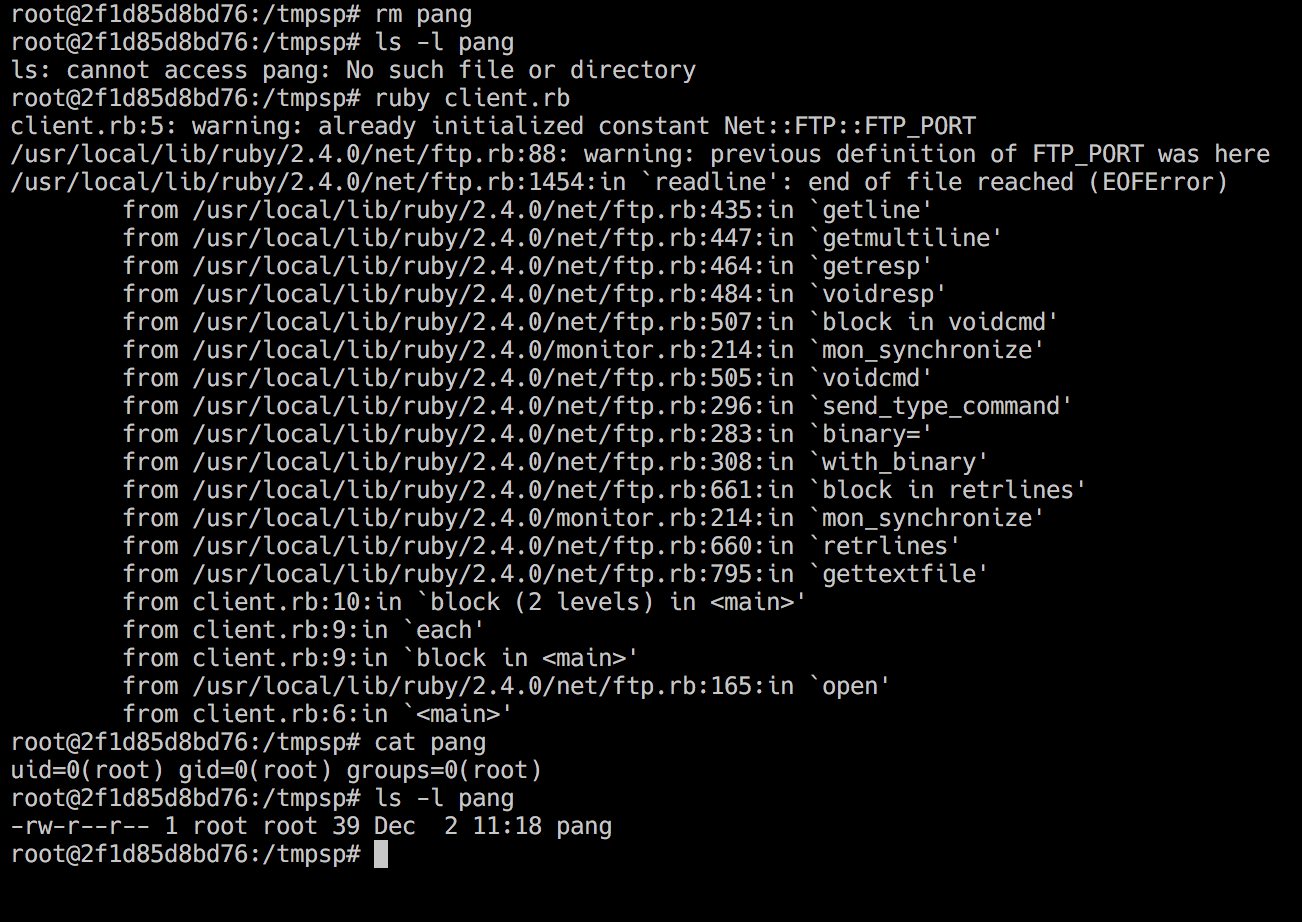
At Heroku we consistently monitor vulnerability feeds for new issues. Once a new vulnerability drops, we jump into action to triage and determine how our platform and customers may be affected. Part of this process involves evaluating possible attack scenarios not included in the original vulnerability report. We also spend time looking for “adjacent” and […] The post Ruby CVE-2017-17405:…
15 Feb 2017

As part of our commitment to security and support, we periodically upgrade the stack image, so that we can install updated package versions, address security vulnerabilities, and add new packages to the stack. Recently we had an incident during which some applications running on the Cedar-14 stack image experienced higher than normal rates of segmentation […] The post How We…
11 Jan 2017
At Heroku, we’re always working towards improving operational stability with the services we offer. As we recently launched Apache Kafka on Heroku, we’ve been increasingly focused on hardening Apache Kafka, as well as our automation around it. This particular improvement in stability concerns Kafka’s compacted topics, which we haven’t talked about before. Compacted topics are […] The post Pulling the…
14 Aug 2014
Retrospectives are a valuable tool for software engineering teams. Heroku consistently uses retrospectives to review operational incidents, root cause problems, and generate remediation tasks to improve our systems. Increasingly we use retrospectives for another purpose: to improve teamwork and interactions on projects. Here we intentionally avoid technical discussions and focus on the emotional and human […] The post Retrospectives appeared…