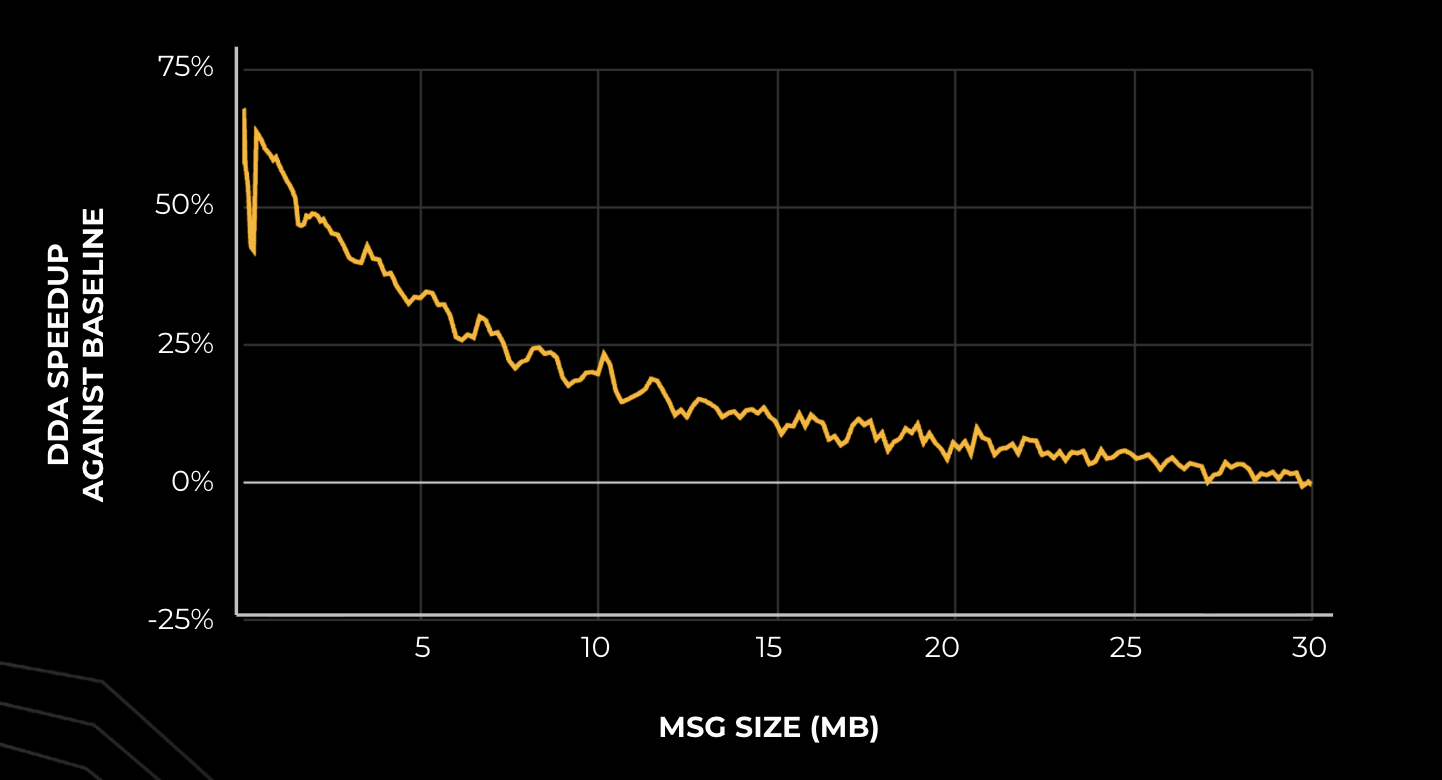
We are open-sourcing the initial version of RCCLX – an enhanced version of RCCL that we developed and tested on Meta’s internal workloads. RCCLX is fully integrated with Torchcomms and aims to empower researchers and developers to accelerate innovation, regardless of their chosen backend. Communication patterns for AI models are constantly evolving, as are hardware [...] Read More... The post…
#ai research
11 posts
24 Feb
17 Oct 2025
Scaling LLM Inference: Innovations in Tensor Parallelism, Context Parallelism, and Expert Parallelism
FacebookAt Meta, we are constantly pushing the boundaries of LLM inference systems to power applications such as the Meta AI App. We’re sharing how we developed and implemented advanced parallelism techniques to optimize key performance metrics related to resource efficiency, throughput, and latency. The rapid evolution of large language models (LLMs) has ushered in a [...] Read More... The post…
30 Sept 2025
Following our keynote presentations at FSE 2025 and Eurostar 2025, we’re delving further into the development of Meta’s Automated Compliance Hardening (ACH) tool, an LLM-based tool for software testing that is automating aspects of compliance adherence at Meta, while accelerating developer and product velocity. By leveraging LLMs we’ve been able to overcome the barriers that [...] Read More... The post…
29 Sept 2025
Imagine being able to use AI to create 3D virtual worlds using prompts as easily as you can generate images. The intersection of AI and VR was one of the biggest topics at Meta Connect this year. In his keynote, Mark Zuckerberg shared his vision of a future where anyone can create virtual worlds using [...] Read More... The post…
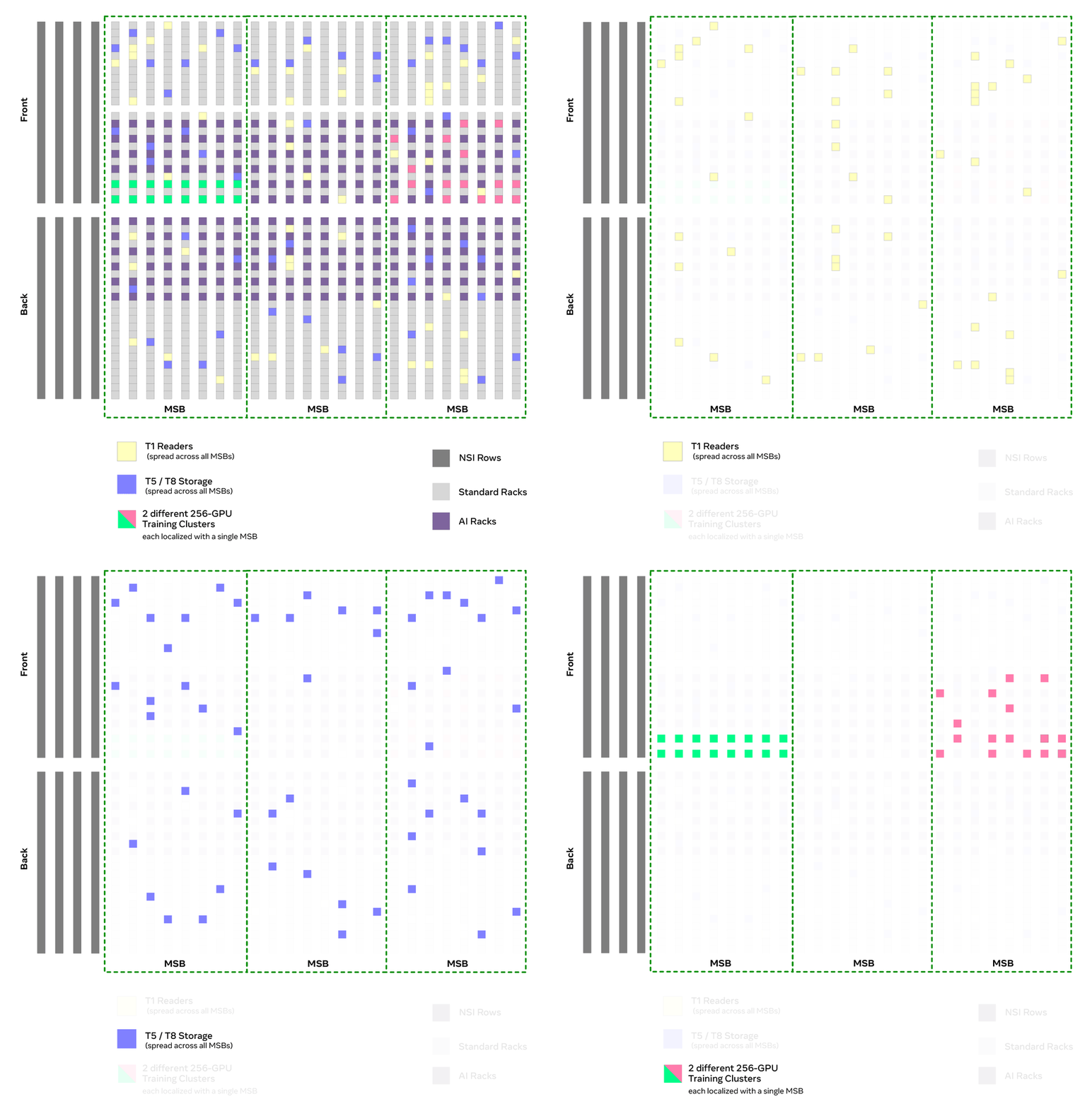
Over the past 21 years, Meta has grown exponentially from a small social network connecting a few thousand people in a handful of universities in the U.S. into several apps and novel hardware products that serve over 3.4 billion people throughout the world. Our infrastructure has evolved significantly over the years, growing from a [...] Read More... The post Meta’s…
6 Aug 2025
The state of the research Diff Risk Score (DRS) is an AI-powered technology built at Meta that predicts the likelihood of a code change causing a production incident, also known as a SEV. Built on a fine-tuned Llama LLM, DRS evaluates code changes and metadata to produce a risk score and highlight potentially risky code [...] Read More... The post…
4 Aug 2025
What if you could control any device using only subtle hand movements? New research from Meta’s Reality Labs is pointing even more firmly toward wrist-worn devices using surface electromyography (sEMG) becoming the future of human-computer interaction. But how do you develop a wrist-worn input device that works for everyone? Generalization has been one of the [...] Read More... The post…
16 Jul 2025
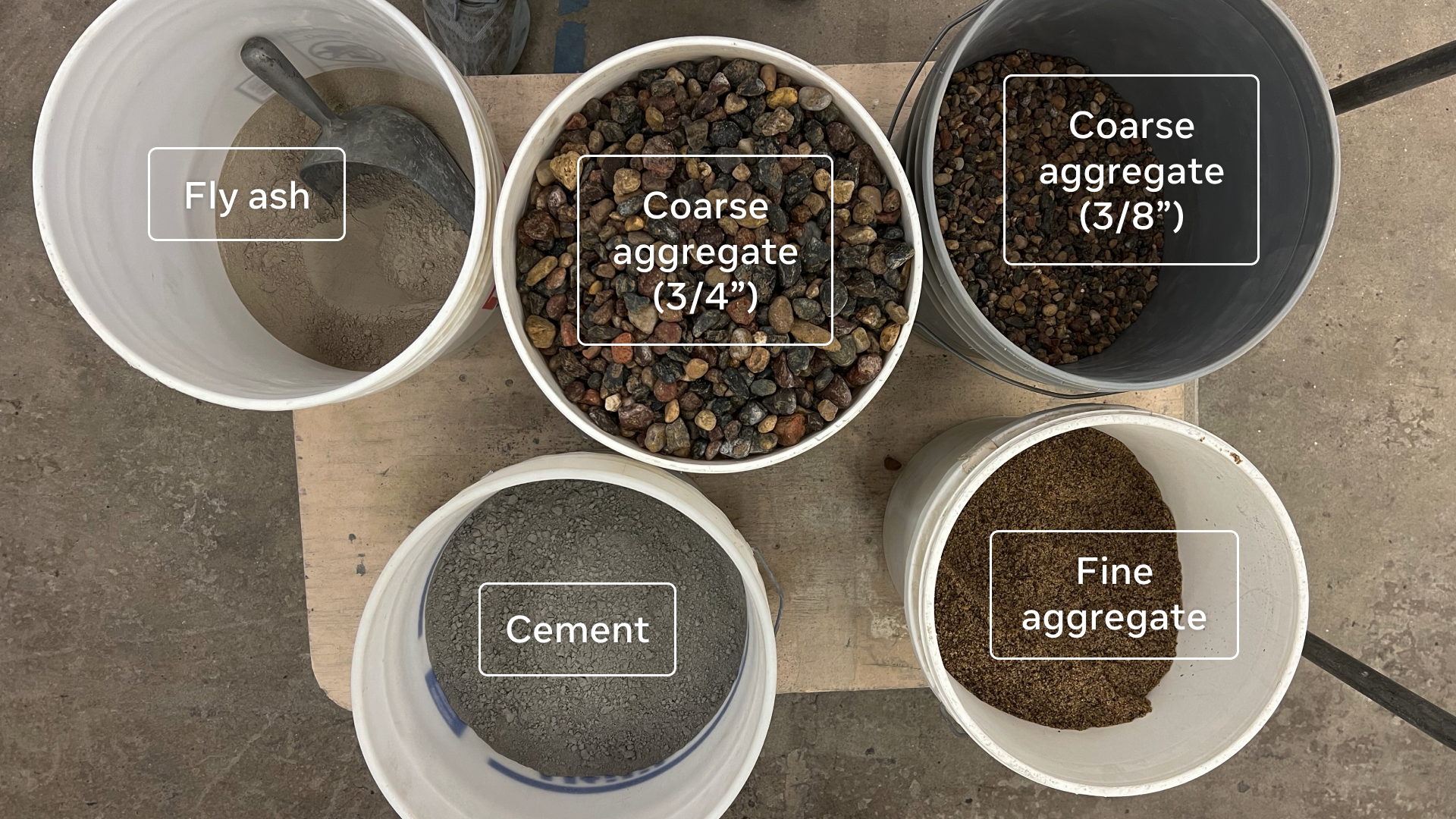
Meta has developed an open-source AI tool to design concrete mixes that are stronger, more sustainable, and ready to build with faster—speeding up construction while reducing environmental impact. The AI tool leverages Bayesian optimization, powered by Meta’s BoTorch and Ax frameworks, and was developed with Amrize and the University of Illinois Urbana-Champaign (U of I) [...] Read More... The post…
8 May 2025
Meta and NVIDIA collaborated to accelerate vector search on GPUs by integrating NVIDIA cuVS into Faiss v1.10, Meta’s open source library for similarity search. This new implementation of cuVS will be more performant than classic GPU-accelerated search in some areas. For inverted file (IVF) indexing, NVIDIA cuVS outperforms classical GPU-accelerated IVF build times by up [...] Read More... The post…
29 Apr 2025
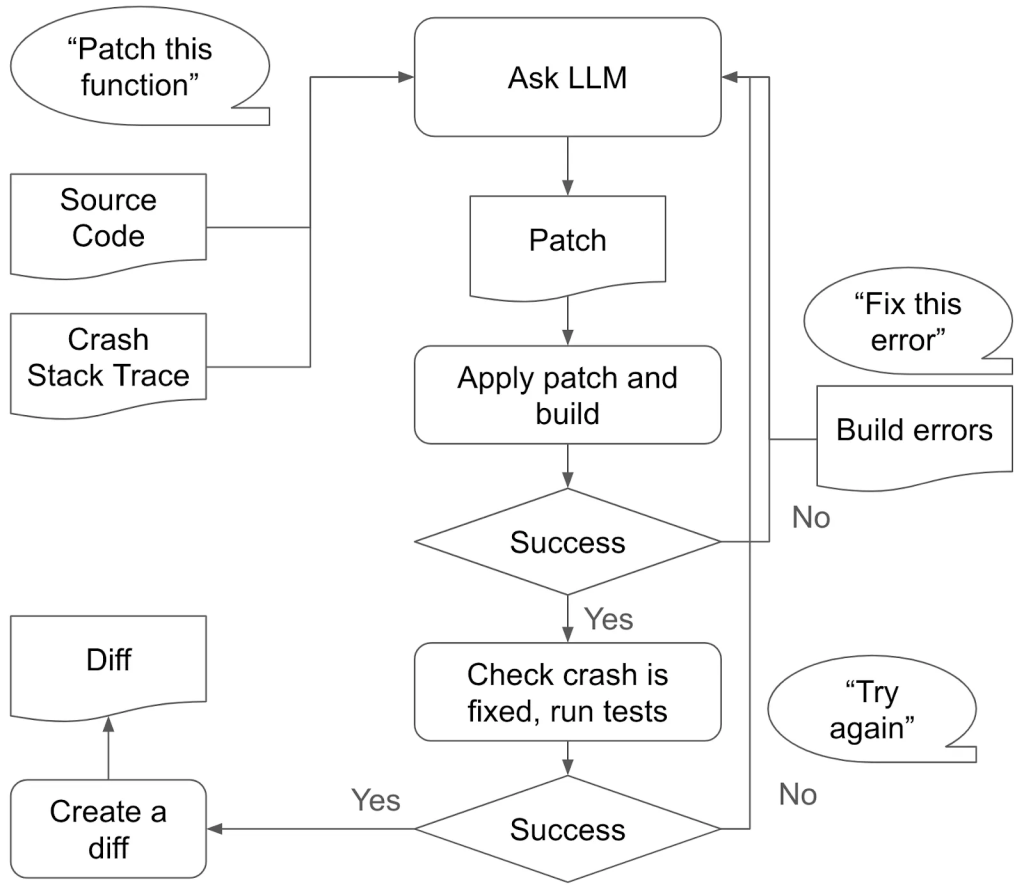
We are introducing AutoPatchBench, a benchmark for the automated repair of vulnerabilities identified through fuzzing. By providing a standardized benchmark, AutoPatchBench enables researchers and practitioners to objectively evaluate and compare the effectiveness of various AI program repair systems. This initiative facilitates the development of more robust security solutions, and also encourages collaboration within the community [...] Read More... The post…
4 Mar 2025
Multimodal AI – models capable of processing multiple different types of inputs like speech, text, and images – have been transforming user experiences in the wearables space. With our Ray-Ban Meta glasses, multimodal AI helps the glasses see what the wearer is seeing. This means anyone wearing Ray-Ban Meta glasses can ask them questions about [...] Read More... The post…